
Introduction: This article is aimed at businesses and operators who need to rent servers in Thailand. It provides a systematic analysis of the main factors affecting prices, including regional differences among data centers, hardware configuration, bandwidth, and value-added services. It also offers guidance on obtaining accurate quotes and making informed decisions to help make sensible choices in the local market.
Key factors affecting server rental prices in Thailand
Multiple factors together determine the rental cost: The city where the server room is located and its network connectivity, server CPU and memory specifications, storage type and capacity, peak bandwidth and billing methods, whether a public IP address and security services are required, as well as the level of after-sales and maintenance support. Each item will significantly affect the final quote.
Regional differences in computer rooms: The impact of city and data center levels
The location of the server room directly affects network latency and international outbound costs. Data centers in capitals or major business hubs usually have better connectivity and multi-operator access, offering higher service quality and availability ; Second-line or edge data centers may be cheaper but have limited networking and redundancy capabilities; a choice must be made based on business requirements.
Network and compliance considerations when selecting a data center
Key considerations include the number of bandwidth providers in the data center, the ability to connect directly to international backbones, local interconnection status, and whether local compliance and data sovereignty requirements are met. For cross-border services, it is necessary to verify latency and packet loss performance, as well as whether the required network acceleration or CDN integration is supported.
The impact of server configuration on price: From beginner to high performance
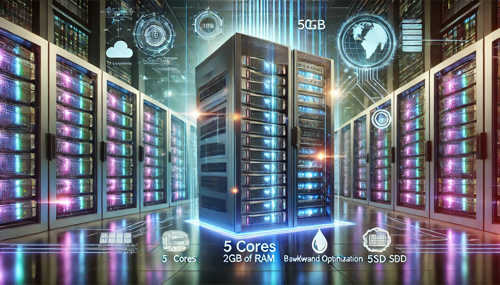
Configuration determines hardware costs: The entry-level version is suitable for lightweight websites or testing environments. The mid-tier configuration is used for e-commerce and small to medium-sized applications. The high-performance configuration is designed for high-concurrency, AI, or database-intensive businesses. The number of CPU cores, memory size, storage type (SSD/HDD), and IO performance are key cost drivers.
Storage and IO impact long-term operational costs
SSDs offer better performance than traditional disks but have a higher cost per unit of capacity ; Tiered storage or cloud disks can balance performance and cost. IOPS limits, backup strategies, and snapshot frequency further affect monthly costs, requiring a quantitative assessment between performance requirements and budget.
Cost considerations for bandwidth, traffic billing, and public IP addresses
There are various bandwidth billing modes: Peak bandwidth, fixed bandwidth, and pay-per-use have their respective advantages. High bandwidth or large amounts of outbound traffic can significantly increase costs, while multiple public IPs and DDoS protection also incur additional expenses. Be sure to clarify the overage billing terms and monthly/yearly subscription discounts.
The impact of value-added services and SLAs on prices
Managed services, backups, monitoring, technical support, and SLA levels increase overall costs, but they reduce operational burdens and risks. Critical business operations should prioritize service terms that offer high availability and rapid response, evaluating the cost-effectiveness of these added benefits rather than just the base hardware price.
How to get an accurate quote: Quotation Request List and Comparison Method
When obtaining a quote, prepare a standardized inquiry form that specifies the CPU, memory, storage, bandwidth, number of public IP addresses, backup frequency, SLA response time, and contract duration. When comparing, consider the total cost of ownership (TCO), which includes one-time setup costs, operational expenses, and potential excess traffic fees.
Comparison and Decision Recommendations: Make choices based on business scenarios
Small projects can prioritize cost and flexibility, medium-sized e-commerce businesses focus on stability and scalability, while high-load or low-latency operations require highly available data centers equipped with professional operations and maintenance. It is recommended to start with a trial or short-term contract to verify performance and support before signing a long-term agreement to reduce procurement risks.
Contracts and Risk Management: Pay attention to terms and hidden costs
The contract details must be reviewed before signing: Termination clauses, auto-renewal, overage pricing, data migration and termination terms, legal responsibilities and local taxes. Clarifying responsibility boundaries and retaining evidence of performance testing and SLA claims can effectively control future operational risks and additional expenses.
Summary and Recommendations
Summary: The cost of renting servers in Thailand is influenced by various factors such as the location of the data center, hardware configuration, bandwidth, and value-added services, making it impossible to express it with a single figure. It is recommended to create a list of business requirements, request standardized quotes from multiple suppliers, and compare TCOs. Prioritize verifying network performance and after-sales support before deciding on the data center and configuration combination.
- Latest articles
- Popular tags
-
-

Comprehensive Analysis And Usage Tips Of Thailand Server Number Format
comprehensive analysis of the thai server number format and its usage techniques to help users better understand and use thai servers. -

Comparative Study Of VPN And Accelerator, Collection Of Methods To Improve Lol Thailand Server
An in-depth comparison of the advantages and disadvantages of VPNs and accelerators in improving the LOL Thailand server experience, including principles, delay and stability analysis, actual measurement and configuration steps, and a collection of executable methods and precautions.